1. Exceptional performances: skill or luck?
How extreme success can become a weak or misleading signal of underlying quality when randomness and selection shape observed performance.
Research program and publications
My research studies how stochastic processes shape performance differences, why people mistake luck for skill, and how organizations can design better learning systems in response.
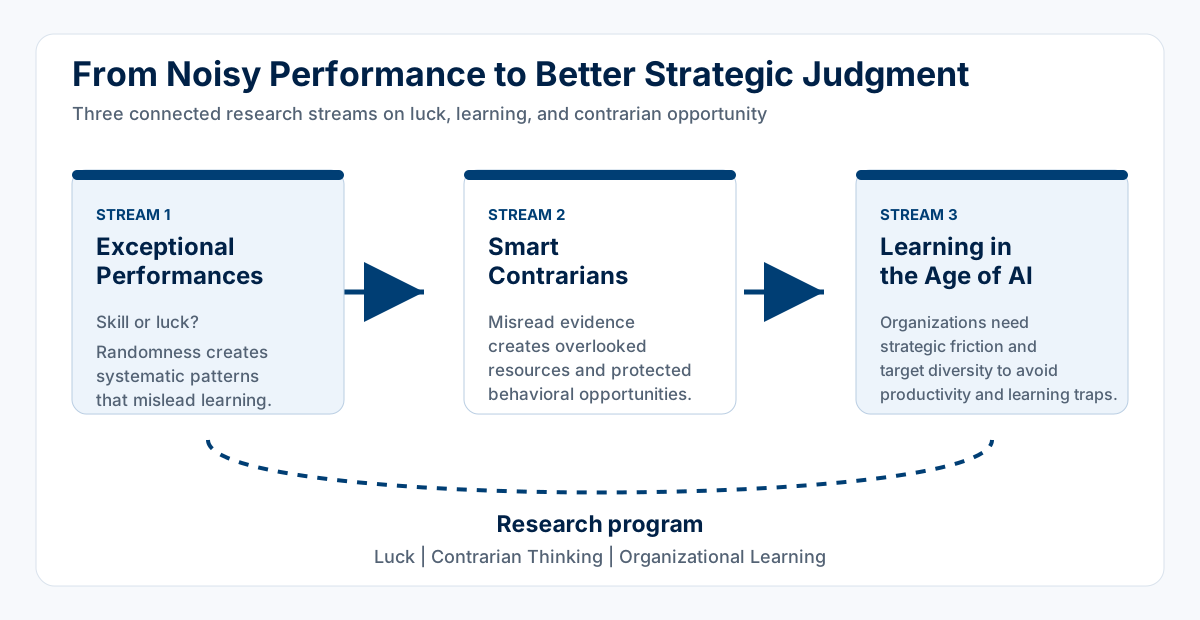
My research program connects luck, behavioural strategy, and organisational design in the age of AI. Across articles in PNAS, Organization Science, Management Science, Academy of Management Review, Strategic Management Journal, Strategy Science, and Academy of Management Annals, I study how randomness creates systematic patterns that mislead decision makers.
The first stream identifies the problem: performance data often contain structured randomness that people misread as skill. The second stream derives the strategic implication: if people are systematically fooled, contrarian strategists can find mispriced resources and overlooked ideas. The third stream applies these insights to AI-mediated organisational learning, where organizations need strategic friction and target diversity to avoid productivity and learning traps.
How extreme success can become a weak or misleading signal of underlying quality when randomness and selection shape observed performance.
How systematic mistakes in evaluation, imitation, and attention create protected opportunities for strategists who understand behavioral blind spots.
How organizations can use strategic friction and target diversity to avoid productivity and learning traps when AI makes imitation cheap.
I chair the organizing committee for the TOM Society. For workshops, summer schools, and community information, visit the TOM website.